
Phase: June 2026
Peptides and post-menopausal ovaries

Peptides: are they worth the hype?
You’ve probably seen the peptide craziness all over the internet, people injecting themselves at home for longevity and wellness purposes…? The claims are pretty bold: anti-aging, injury healing, better metabolic function, longevity, and so much more.
But what even are peptides? and do they actually work?
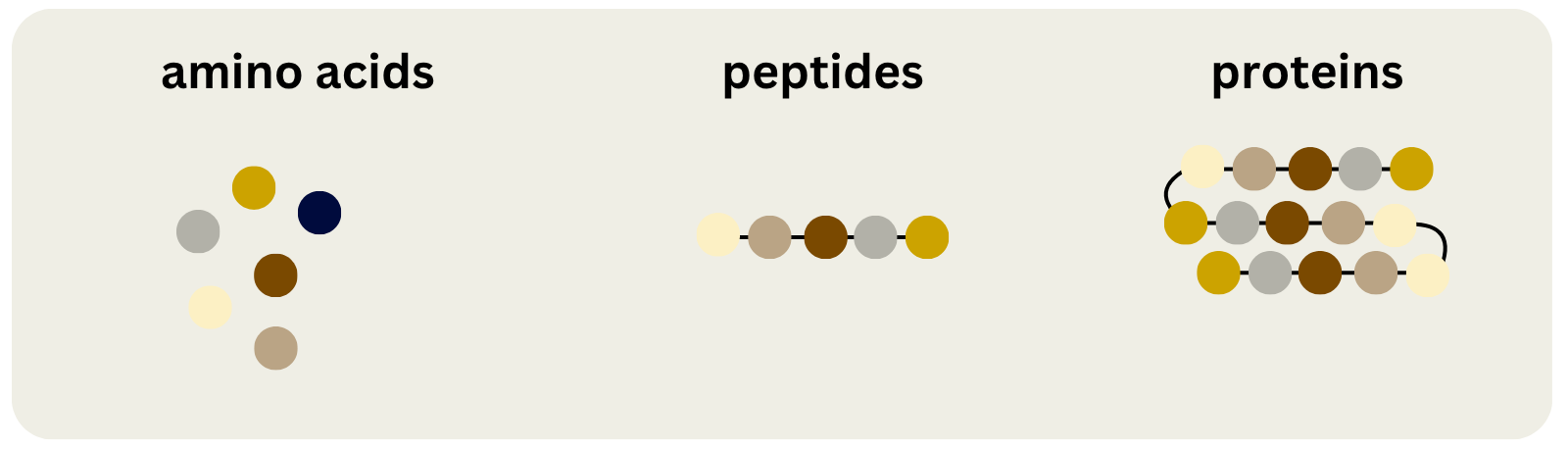
Peptides are made up of the same building blocks as proteins, but they are shorter, and some have therapeutic uses. The famous GLP1 receptor agonists like Ozempic for example, are peptides. So is insulin, regularly used by diabetics. We also have them naturally in our bodies, where they carry out essential functions.
The ‘wellness’ peptides are different players
The ones flooding your feed, often have weird and complicated names: BPC-157, TB-500, DSIP, MOTS-c. And they are not approved for human use, which makes them unregulated treatments.
Most of these peptides have limited studies on humans. Indeed some have preliminary data, and a few may even be in ongoing clinical trials. But the honest summary is this: right now, most injectable ‘wellness’ peptides don’t have enough evidence for efficacy and long-term safety, to justify their routine use.
And that’s not all, a recent preprint study third-party tested some of these peptides and found that many failed to meet basic quality benchmarks like purity, dosage and toxin presence.
Yet, they are hugely popular and used by wellness enthusiasts, especially in the United States.
What about topical peptide serums and creams?
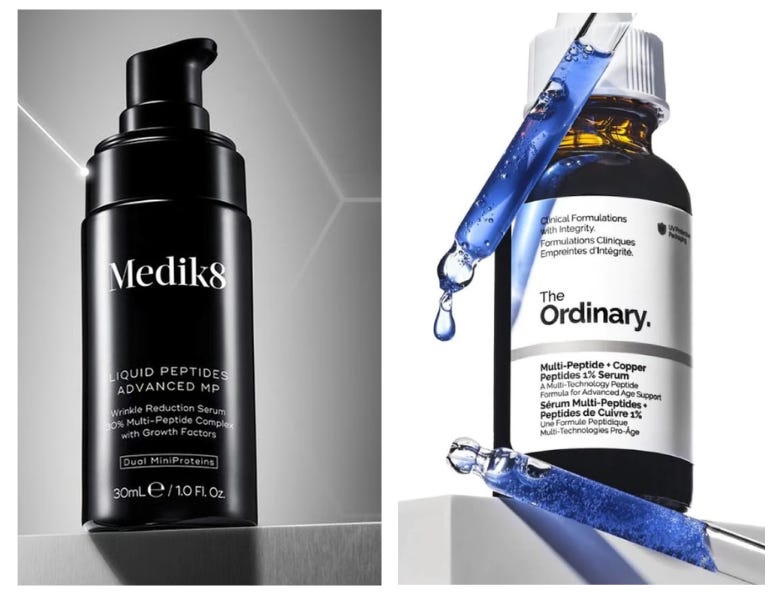
Topical peptides are also becoming widely popular in the skincare and haircare world. You’ve probably seen peptide serums and creams like Medik8 Liquid Peptides Advanced MP, or The Ordinary Multi-Peptide + Copper Peptides 1% Serum marketed all over social media.
So, what about these? Do peptide serums actually work?
Here, the evidence is more encouraging. There’s more research for these cosmetic peptides in humans with promising results with regards to wrinkle appearance improvement, hydration boosting, and other anti-aging features. But formulations do matter and an important caveat is that peptides are not easily absorbed into the skin due to their size and physical qualities.
To get around this, modern brands are packing these peptides into “nano-systems” to help them reach into the cells, which is where they create a response that ultimately translates to the ‘beauty-effects’ they are marketed for. There is also evidence for cosmetic procedures like laser use, or microneedling and electrical pulses can boost absorption too.
So, if you are going to consider incorporating any peptides into your routine, cosmetic ones are a safer, and more studied bet.
Do the post menopausal ovaries have a second function?
Evolutionarily speaking, have you ever wondered why menopause happens? It’s often framed as one of nature’s ‘unfair’ deals, so why would it be selected for?
One long standing answer is the ‘Grandmother hypothesis’, or the ‘Grandmother effect’.
It poses that by shortening the reproductive life span of women, they can then put their energy into supporting their grandchildren and community instead. Improving maternal-infant care and enhancing human survival overall.
In today’s world there is still an essential role in grandmothers. If not only for their support in bringing up grandchildren, then also in the transfer of resources, knowledge and energy to the younger generations.
Think about it, have you learnt any lifelong wisdom from your grandmother(s)? I certainly have.

But I digress. The point really is that from the point a woman reaches menopause, the ovaries were thought to essentially ‘retire’ and no longer serve a purpose for our biology and survival. Recent research suggests that’s not the case.
In this study researchers looked at ovaries from mice and found that in post-reproductive mice, the ovaries were ramping up genes involved in the regulation of the immune system and inflammation. And yes, looking at mice is not necessarily directly translatable to humans, but the same research group also did a similar study in humans with similar results.
But what does this mean?
So far, not much. We don’t know whether this newfound second function in post-menopausal ovaries is good or bad or neutral. It does mean that ovaries are likely not a ‘retired’ organ post menopause though, and once again highlights how little we know of women’s bodies…
Thanks for tuning in! If you liked this don’t forget to share and subscribe for monthly relatable science updates.